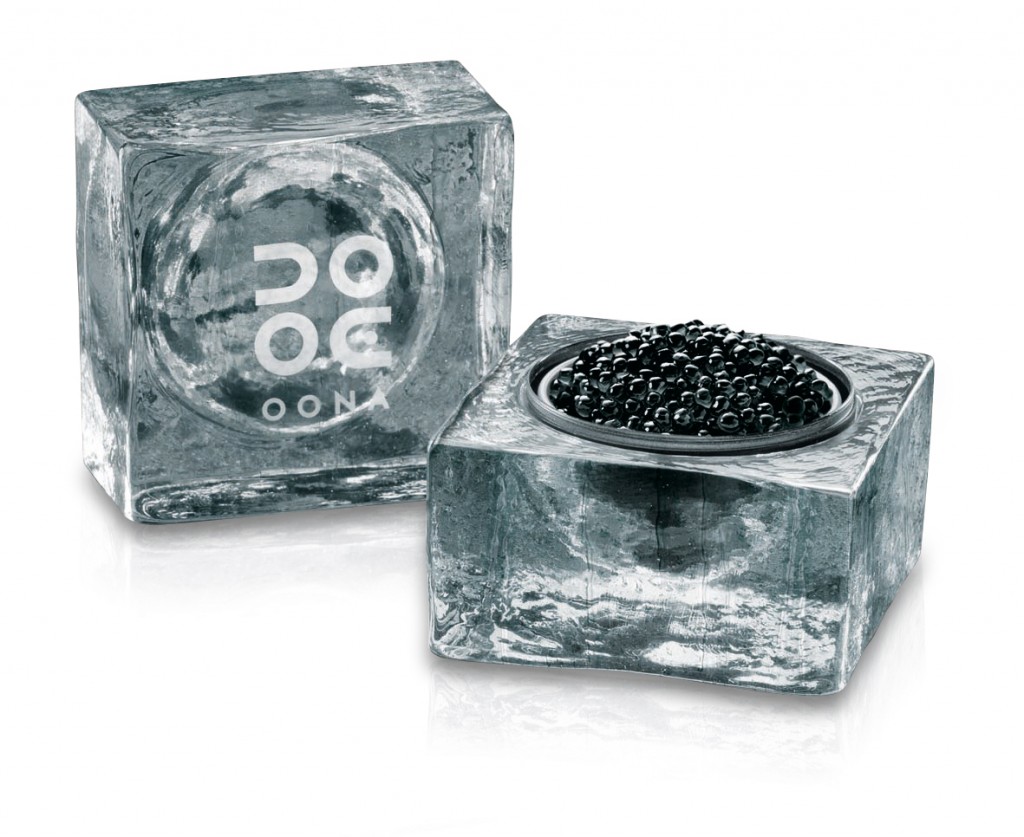
Discover pure luxury OONA caviar from Swiss Alpine mountains with a special exclusive introductory best caviar price to the US market!
The homogenous colour and the perfectly round grain characterise this caviar. With a salt content of maximum 3.5 percent, it is slightly salty (Malossol) and develops its nutty to creamy aroma ideally. This eloquent taste emphasises the purity of this caviar particularly well.
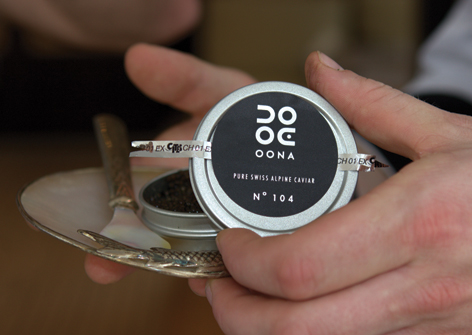
Origin: Switzerland
Common name: Siberian sturgeon caviar which is recognized as the best alternative to Beluga caviar.
Flavor: nutty to creamy aroma.
Species: slightly salty (Malossol)
Weight: 1,05 oz
Best-before date: 10 days at -2° to +2° (Recommended consumption within 10 days when kept in a domestic refrigerator)
Shipping: Perishable – ships FedEx Overnight with Stay-Fresh™ packing
Tins are sent without the Ice Cube which you can order separately in our shop. Ice Cube packaging is available for all 1,76 and 1,05 oz items.
You can now buy caviar online with a special price available only in Gourmet Food online shop by Le CITY deluxe .
$260.00 Read More
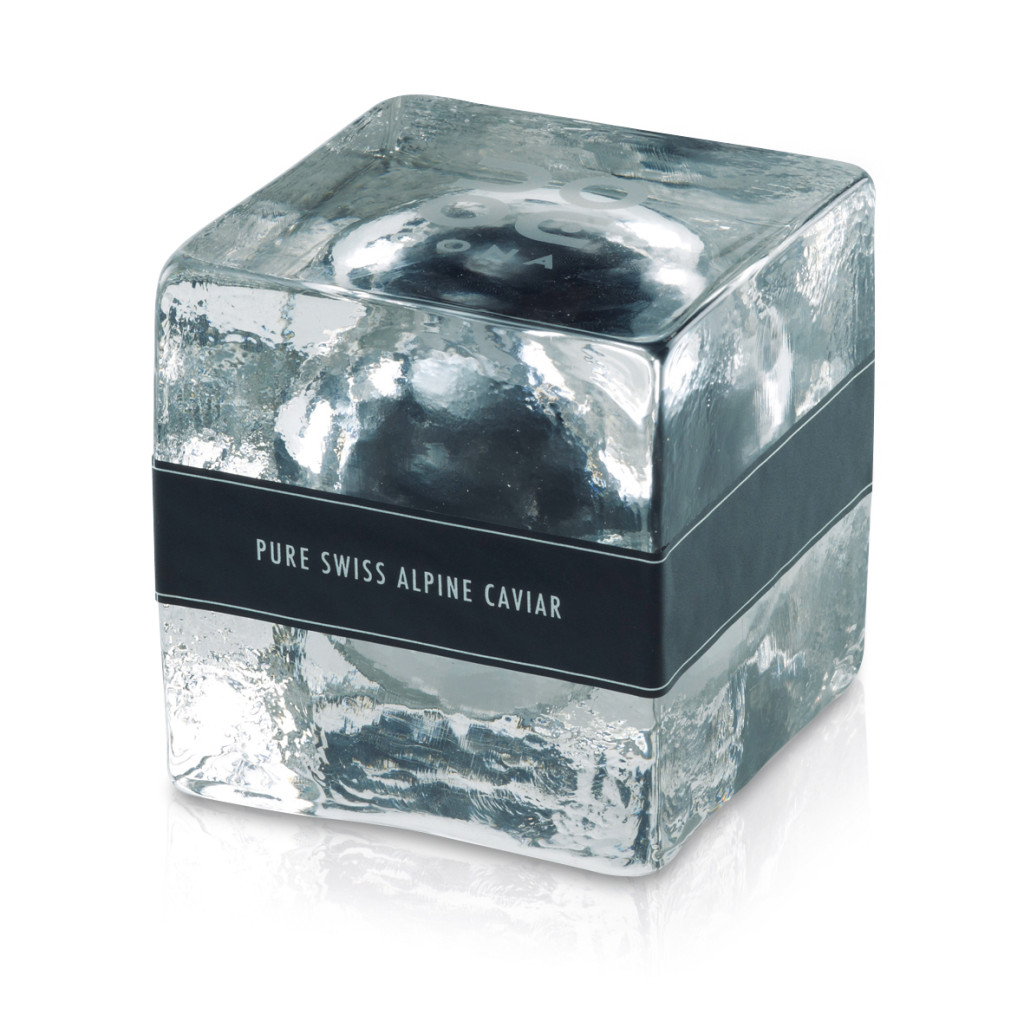
OONA – unique. Derived from the Celtic language, this pure word stands for the one, the only, the extraordinary. The deep, sonorous tone “Oona” hints at the perfection of every individual grain of kaviar. Oona – pure mountain water caviar, traditional yet modern, pure pleasure.
Ice Cube – ice, mountain, water. The exquisite mountain water caviar is enclosed by the Ice Cube. Quality, pleasure and purity are guaranteed by this unique, precious caviar case. The glass and the shape of the glass cube, which is manufactured in Switzerland, symbolises ice, the origin of the water. The caviar sturgeon is embedded in the centre of the cube in the shape of a sphere, in the likeness of a perfect caviar pearl. Each “Ice Cube” is unique, being created by hand, and the shape and the aesthetic lines make it tempting to use the Ice Cube as a stylish and individual decoration after you have enjoyed the caviar.
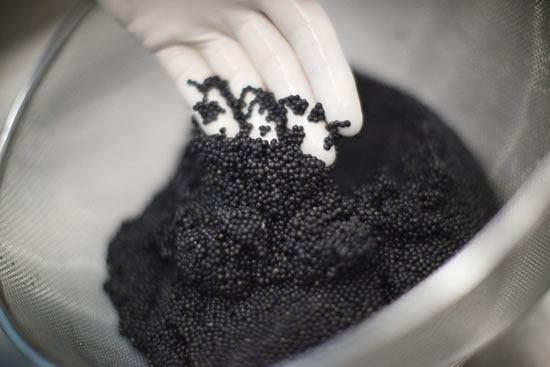
OONA CAVIAR
The Tropenhaus (Tropic House) Frutigen is opening a new chapter in the history of this delicacy: sturgeon caviar that grow in the pure, naturally warm mountain water in Frutigen. Siberian sturgeon caviar is recognized as a great alternative to Beluga sturgeon caviar, which is impossible to find nowadays in wild life.
The history of caviar
Many stories and myths are associated with caviar … the most popular version says that the word “caviar” is derived from “Kahv-Jar”, which means “the cake of pleasure” among an Iranian people known as the Khedive. Another legend claims that the word “caviar” has developed from the Persian “Khag-viar“, which means a “small, black fish egg“.
Before caviar was regarded to be a delicacy, it was considered to be a poor man’s food and was the basic food of fishermen on the Caspian Sea and on the Volga. The main reason for this was that the sensitive caviar quickly becomes spoiled, and cannot be sold. It was precisely this perishability without the corresponding refrigeration that made the caviar so exclusive, and therefore interesting, for the tsars, aristocrats and nobles.
It was very difficult to offer a sparkling, exquisite caviar at a feast among the high society, and was therefore regarded as particularly noteworthy.
From the Russian Empire, caviar then began its culinary journey towards Europe. Russian caviar barons (caviar dealers) travelled through the countries offering this valuable delicacy. Up to the year 1925, Russia held the exclusive fishing rights in the Caspian Sea. In 1953, however, Iran founded its own Iranian (state-controlled) fishing association. Today, wild sturgeon have become rare, and wild caviar has become very hard to find. The history of caviar has now been taken one step further – with OONA the pure mountain water-caviar from Frutigen in Switzerland.