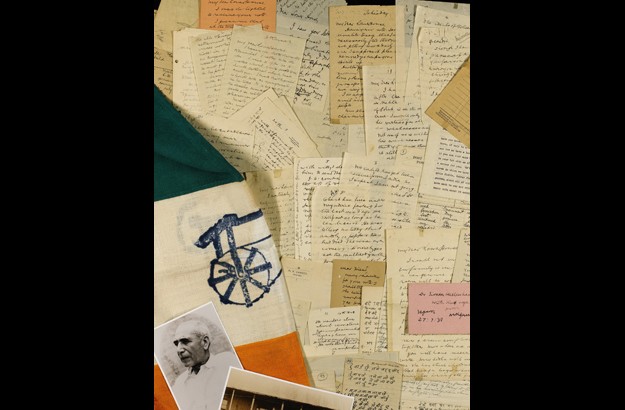
International auction house Sothebys announced the sale of a priceless collection of Gandhi memorabilia last month to be held in London on the 10th of July. As is usually the case when historical Indian relics go on sale at international auction houses, theres been a bit of a furore in the media. Ergo, the Indian government has stepped in to retrieve Bapus correspondence with family members and good friend and German architect Hermann Kallenbach, his constant companion during the last decade in South Africa. The rumor doing the rounds is that this priceless collection of pictures and letters will come back to India later this month, but the word is still not official. Sothebys official statement on the issue still maintains that the collection will be auctioned on 10th July in London.
Le City Deluxe-Delhi spoke about the collection and auction to Dr. Gabriel Heaton, Deputy Director, Specialist books and manuscripts, Sothebys.
Excerpts:
Where were these documents acquired from?
This archive is owned by members of the family of Hermann Kallenbach.
What is the condition of the collection?
The archive has been treasured by four generations of the family and is generally in good condition, although some of the documents are on very thin paper and are rather delicate. The items that Gandhi gave to Kallenbach the pieces of khadi, Swaraj flag, and box charka are in excellent condition.
Has Sotheby’s auctioned other Gandhi memorabilia in the past?
Sothebys has a long tradition of bringing to the open market documents and other artworks of great historical importance to many nations around the world, including letters and documents by Gandhi. As has been widely reported, we sold an important series of letters by Gandhi to Kallenbach in 1986 (these are now in the Indian National Archives). We had an important group of letters and manuscript articles by Gandhi in July 2007 and have sold a number of individual letters by him in more recent years.
In the past, some well-known Indians have jumped into such auctions and bought Indian relics deemed to be of national importance to make sure they stay in India. Do you expect a similar story unfolding this time around?
This archive is likely to appeal to a range of private and institutional buyers.
Do these documents offer any insights into Gandhi’s struggle in South Africa?
This archive contains much information about, for example, Tolstoy Farm, the community established by Gandhi and Kallenbach that provided shelter to Satyagrahis in South Africa. In addition to personal correspondence, there are letters written from Gandhis legal practice and business papers relating to Tolstoy Farm. The archive also reveals the close connection that Gandhi retained with South Africa after his return to India through Kallenbach and his own son Manilal, who remained in South Africa.
Does the Kallenbach family still have any connections with India, or with Gandhi’s family?
Sothebys does not comment on its clients private affairs.
Does historical memorabilia from India attract a lot of interest from buyers?
Indias rich historical heritage, the importance of their history to many Indians today, and the increased wealth found in contemporary India, mean that there is often strong interest in Indian historical material at auction.