Text by Meraj Shah
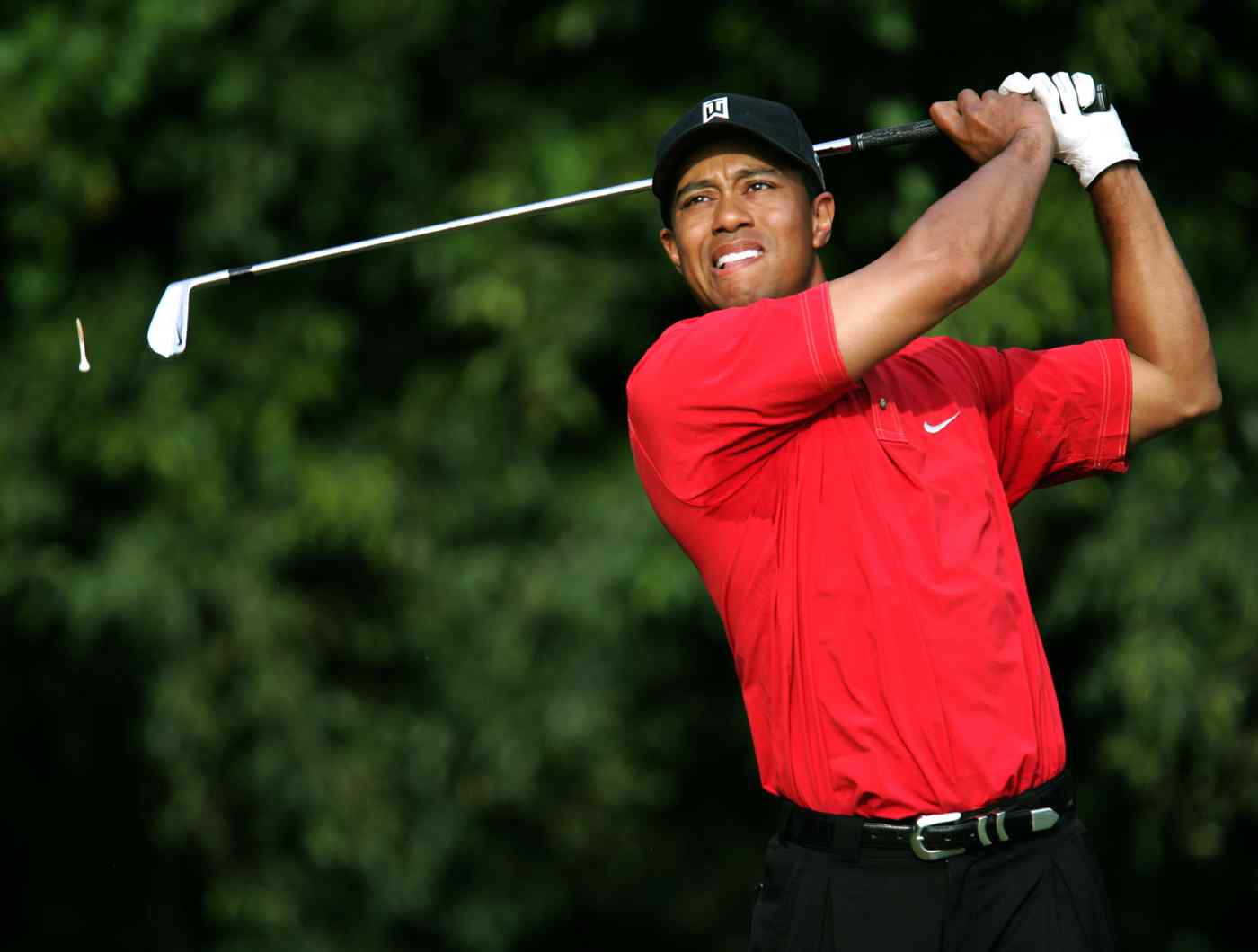
The quest for distance on the golf course took on feverish proportions after Tiger Woods’ record-breaking 12-stroke victory at the 1997 Augusta Masters. Woods’ towering drives blew away the competition (Woods averaged 323 yards off the tee, 25 yards longer than his nearest competitor) and eventually led Augusta National to incorporate design changes which added length to the golf course. Woods’ meteoric rise ushered in an age of athleticism, driving professional and amateur golfers alike to the gym. It also drove equipment companies to the drawing board. Hitting a big drive was desirable, egotistic, felt good, and everyone who played the game wanted to be King Kong.
Cut to 2010: the average driving distance on the U.S. PGA Tour for 2010 was an astounding 287.3 yards. That would have led or been second on the individual rankings for driving distance every year from 1980 to 1996. The story runs on similar lines for weekend golfers: 280 yards off the tee no longer has the aura it once had.
And it’s got less to do with swing changes (or evolution) and more to do with new armament.
The primary weapon – the ‘big stick’ – has come a long way in the past decade: in fact the drivers available today are practically unrecognisable with their counterparts a decade back. They incorporate an astonishing level of technology designed to make it easier to hit the ball far and to be completely adaptable to different kind of golf swings.
Innovation in the latest drivers has been two-pronged: while some, like Taylormade’s R11 and Titleist’s D2/D3 range of drivers have taken adjustability to a different level, others like Cleveland’s Launcher and Callaway’s Diablo Octane series have incorporated lighter weight and better aerodynamics.
The multiple adjustability options on these new drivers can be confusing but have only one goal: tailoring how the club behaves according to an individual golf swing. That can involve moving weights around in the clubhead to affect how it behaves at impact, changing the clubface angle to alter how the ball curves in the air, or simply changing the loft of the club to affect the ball flight. The best part is that you don’t need to go to a ‘club-fitter’ – all you need is a wrench which comes with the club. Its not rocket science, though it may take a few buckets of balls at the range to figure out what suits your swing.
The clubhead weight bit is easier to understand: a lighter club translates into faster clubhead speed which, in turn, means more distance. Of course, hitting a lighter club changes the feel of the swing and can take some time getting used to. Clubs like Callaway’s Diablo use a super-light (yet strong) patented forged composite material which is used by Lamborghini to manufacture parts of its Supercars. A bit too radical? Maybe. At the end of the day, golf is as much a game of power, as it is of finesse. It rarely rewards a golfer who persists in smashing the ball as hard as he can on every shot. You can’t really score well unless your irons, and even more significantly, your short game, are reasonably consistent. That said, with modern courses routinely being designed to play more than 7000 yards off the tips, there has never been more of a premium on hitting it long off the tee. All said and done there’s really no reason to toil for extra distance with an outdated driver that doesn’t suit your swing. The new age drivers may be no substitute for a golf lesson and hours of practice at the range, but they come pretty darn close.
Titleist 910 D2/D3
Manipulate the club’s loft and lie into any of the 16 possible settings to optimize launch angle. Rs. 23, 500
TaylorMade R11
Dazzlingly white (to reduce glare) combined with adjustable weights, hosel and soleplate which present you with a mind-bogging 48 adjustable options. Rs, 21,000
Callaway Diablo Octane
Weighs just 195 grams thanks to a carbon-fibre crown and Lamborghini patented forged composite material. Grip it and rip it. Rs. 18,000
Callaway Razr Hawk
Precisely-shaped and weighted driver which is incredibly forgiving characteristics on off-centre hits. Rs. 21,990
Cleveland Launcher Ultralite Series
This 270 gram driver weights 25 grams less than its predecessors. A longer shaft means even more distance if you can control it. Rs. 17,000
TaylorMade Superfast 2.0
An ultra-light 48-gram shaft and overall weight of just 280 grams coupled with a low-riding sole and sloping crown launch the ball high with less spin. An absolute cracker.
Rs. 17,000
W: callawaygolf.com/global/en-us/golf-equipment/golf-clubs/drivers/diablo-octane-driver.html