

Vol 1 Spring 2013
lived one winter in a rented house on Miami Beach and then moved to the home on Palm Island, where he spent his last years suffering…He did go to nightclubs occasionally and sometimes would take his speedboat to go to Bimini in the Bahamas to pick up some booze, but that was about it.”
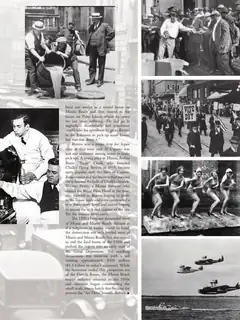
Bimini was a major stop for liquor runs at that time and Al Capone was just one customer among many to make pick ups. A young pilot in Miami, Arthur Burns “Pappy” Chalk, who founded Chalk’s Flying Service in 1919, became quite popular with the likes of Capone. Rumrunners and the lawmen that pursued them formed the bulk of Chalk’s clientele. Thomas Peters, a Miami financier who owned the Royal Palm Hotel at the time, also traveled to Bimini hoping to profit in the liquor trade and even constructed a new three-story hotel and casino hoping to attract the rich and famous of the era. Yet, the tourists never came.
The 1926 Hurricane devastated most of Miami and Miami Beach. Almost as if a judgment of karma waved its hand, the destruction not only leveled most of Miami and Miami Beach, but also served to end the land boom of the 1920s and pushed the region into an early start of the Great Depression. The resulting devastation was immense with a toll totaling approximately $100 million ($1.3 billion in today’s economy). While the hurricane ended this prosperous era of the Florida Boom, the Miami Beach tourist industry returned in the 1930s and investors began constructing the small-scale, stucco hotels that became the present day “Art Deco” historic district.